
A Gallery Rebuilt Around One Small Studio: Elliot's Control Room
Priya Nandra tells how a small studio's cramped gallery was planned again from desk layout to comms, and what Elliot's team noticed on their first live show afterwards.
5 min read
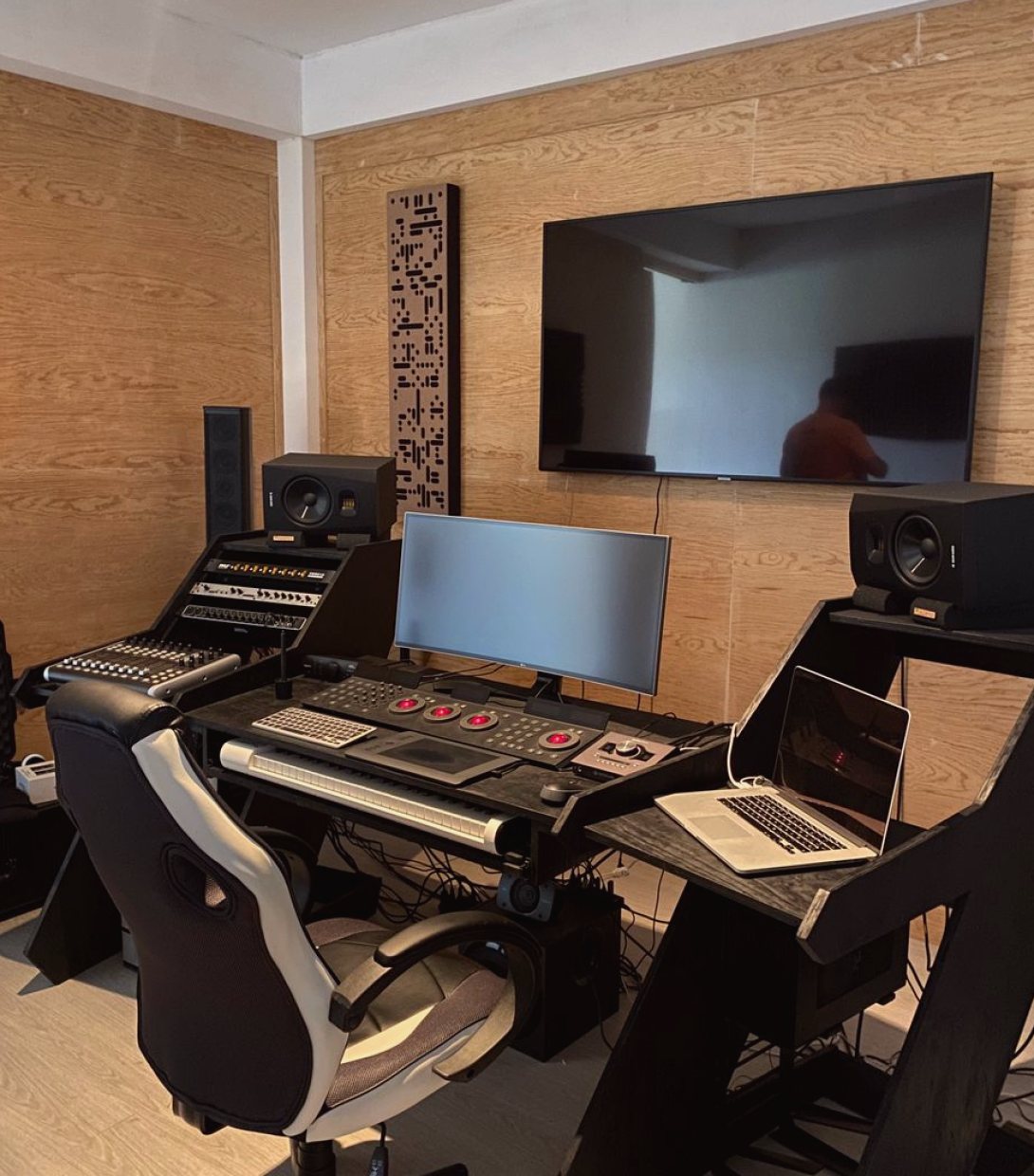
A gallery that had grown by accident
Elliot runs a small studio that records talk programmes and streams a weekly live show. When he first rang us, his gallery was a converted storeroom. Monitors sat on a shelf above the desk, cables ran across the floor to a rack by the door, and the producer had to lean sideways to see the vision mixer's screen.
He did not ask for a redesign. He asked whether we could stop the team missing cues. I visited on a quiet weekday, sat in each seat for an hour and listened to how the crew actually spoke to one another. Most missed cues came from people not being able to see or hear what they needed, not from carelessness.
That visit shaped everything that followed. Control Room Design starts with watching the room in use, because a drawing made from a brief alone tends to repeat the habits that caused the trouble.
Starting from who needs to see what
Before touching a plan, we wrote down each role in Elliot's show: producer, vision mixer, graphics operator, sound and the person watching the stream. For each one we listed the screens they must see without turning their head, and the voices they must hear without asking for repeats.
This sounds obvious, yet it often reverses the usual order. Many rooms begin with a monitor wall chosen for its size and then ask people to adapt to it. Here the wall was sized and divided only after the list was agreed, so that the programme output, the preview and the camera sources sat where the vision mixer's eyes naturally rested.
Elliot's team found the exercise useful in itself. Two of them realised they had been watching the same feed for months while neither watched the stream return, which explained a few awkward moments on air.
- One list of screens and sounds per role
- Monitor wall divided after the list, not before
- Programme and preview placed at natural eye level
Desk layout and the monitor wall
The new desk follows a simple idea: the person who decides sits at the centre, and everyone who feeds that person sits within an arm's reach or a clear glance. We moved the producer one seat back and slightly raised, so they could see the vision mixer's hands and the wall together without leaning over anyone.
The monitor wall went from a loose shelf to a fixed frame with a consistent grid. Cameras are always in the same positions, labelled on screen in the same way, and the streaming return has its own corner. Brightness and angle were set once and written down, so a new operator sees the same picture as the last.
Cable runs were rerouted behind the desk and under a raised section, which removed the trip hazard and made the room calmer to move through during a show.
Signal flow and comms on paper first
Callum, our technical engineer, drew the signal flow as a single page before any equipment was moved: where each camera enters, which router outputs feed the mixer, the multiviewer and the encoder, and where a spare path exists if something fails. Elliot's engineer checked it line by line and changed two labels to match the names his crew already used.
Comms received the same care. The old setup had one shared channel, so every instruction reached everybody. We separated the camera operators from the production channel and gave the producer a way to speak to the whole group when needed, which cut the chatter during live moments.
Naming things in the crew's own language mattered more than any piece of hardware. A label people recognise at a glance saves seconds that a show rarely has.
- Single-page signal flow agreed before installation
- Spare path noted for the encoder feed
- Separate comms channels for cameras and production
The changeover and the first live show
We fitted the room across a quiet week, leaving the old gallery usable until the new desk was ready for a rehearsal. Elliot's team ran a full dress rehearsal with the show's real graphics and a mock fault, so they learned where to look when something went wrong before an audience was watching.
The first live show was unremarkable, which is the best result a gallery can have. The producer told me afterwards that she had not once asked anyone to repeat an instruction. The vision mixer said he had stopped glancing around the room and simply watched the wall.
There were small adjustments in the following weeks, mostly to label wording and one monitor angle. We treat those as part of the job rather than a sign of something missed, since a room only reveals its quirks once people work in it.
What I took from Elliot's room
The lesson I carry from this case is that a good control room is built around the conversation of the crew, not around the equipment list. Elliot's budget was modest, and most of the improvement came from placement, naming and a clear signal diagram rather than from new machinery.
If you are thinking about changing your own gallery, begin by sitting in each seat during a normal show and writing down what that person cannot see or hear. That page of notes is the most useful brief you can give to anyone who plans the room.
Mid autumn is a sensible time to do this, with the busier broadcast months not yet at full pace and teams still willing to rehearse.
Elliot's studio did not need a grand gallery, only one arranged around the people who work in it. By listing who needs to see and hear what, fixing the monitor wall, drawing the signal flow on a single page and separating the comms, the team gained a calmer show. Our work on control room design follows the same path each time: observe first, plan on paper, rehearse, then adjust once the crew has lived in the room.
You may also like
-
Planning a Live Show: A Producer's Guide to Crews, Schedules and Rehearsals
A practical walk through how production management holds a live television or streaming show together, from the first crew list to the final rehearsal before going to air.
-
Where Should the Producer Sit? Control Room Layout Questions Answered
The question we hear most when planning a gallery: who sits where, and why. Rhys Pemberton walks through desk order, sightlines and talkback so a crew can work without raising its voice.
-
The Encoders, Graphics Engines and Monitors Behind Our Streams
A look at the tools Priya's streaming crews rely on: encoding, graphics, signal monitoring and backup paths, and why each one earns its place on a live online production.
Get in touch
Write to us: hello@storylinki.info